Can a Felony Charge Be Reduced to a Misdemeanor in New Mexico?
Facing a felony charge can affect nearly every part of your life. You may be worried about imprisonment, employment, your reputation, and what a criminal conviction could mean for your future.
Facing a felony charge in New Mexico can create serious concerns about your freedom, future employment, reputation, and criminal record. A felony conviction may carry significant penalties, including imprisonment, fines, probation, and long-term consequences that can affect many areas of your life.
If you have been charged with a felony, you may be wondering whether the charge can be reduced to a misdemeanor. The good news is that a felony charge can sometimes be reduced to a misdemeanor in New Mexico, depending on the offense, the available evidence, your criminal history, and the circumstances of your case.
Can a Felony Charge Be Reduced to a Misdemeanor in New Mexico?
Yes. In certain circumstances, a felony charge may be reduced to a misdemeanor in New Mexico.
One possible way this happens is through plea negotiations between the defense attorney and the prosecutor. Depending on the facts and applicable law, the prosecutor may agree to allow the defendant to plead guilty or no contest to a lesser or related misdemeanor offense.
New Mexico Rule of Criminal Procedure 5-304 allows the prosecution and defense to negotiate a plea agreement involving a charged offense or a lesser or related offense. The agreement may also provide for the dismissal of other charges or a sentencing recommendation.
However, the court must review the proposed plea agreement, and the outcome is not guaranteed.
Whether a felony can be reduced depends on several factors, including:
The nature and severity of the alleged offense.
The strength of the prosecution’s evidence.
Whether the offense has a legally available lesser misdemeanor offense.
The defendant’s prior criminal history.
Whether aggravating circumstances are involved.
The prosecution’s position and the terms of any proposed agreement.
Not every felony can be reduced to a misdemeanor. Some offenses carry specific statutory penalties or restrictions that limit the available options.
A criminal defense attorney can evaluate the charge and determine whether pursuing a reduction is a realistic strategy.
What Is the Difference Between a Felony and a Misdemeanor in New Mexico?
Before discussing how a felony charge may be reduced, it helps to understand the difference between felony and misdemeanor offenses under New Mexico law.
Both are criminal offenses, but they differ in their potential penalties and long-term consequences.
Felony Charges
Felonies are generally more serious criminal offenses and may carry state prison sentences.
New Mexico generally classifies felonies into four degrees:
First-degree felony: Generally carries the most severe penalties.
Second-degree felony: A serious offense with substantial potential imprisonment.
Third-degree felony: Carries less severe penalties than first- or second-degree felonies.
Fourth-degree felony: Generally carries the lowest basic prison sentence among the four felony classifications.
The actual punishment depends on the offense, applicable sentencing statutes, prior convictions, and any enhancements.
Misdemeanor Charges
Misdemeanorsare generally less serious offenses than felonies and carry lower potential penalties.
New Mexico recognizes petty misdemeanors and other misdemeanor classifications. Depending on the offense, penalties may include:
Jail time in a local detention facility.
Fines.
Probation.
Court costs.
Restitution.
Other court-ordered conditions.
A misdemeanor conviction can still have consequences, but it generally does not carry the same potential prison sentence as a felony conviction.
How Can a Felony Charge Be Reduced to a Misdemeanor?
There are several legal considerations and potential strategies that may help a defendant pursue a lesser charge.
The appropriate approach depends on the specific offense and the evidence available in the case.
1. Negotiating a Plea Agreement
Plea negotiations are one of the common ways a felony charge may be reduced.
A defense attorney may negotiate with the prosecutor to seek an agreement allowing the defendant to plead guilty or no contest to a misdemeanor rather than the original felony.
For example, depending on the facts and applicable statutes, a person facing a felony theft allegation might be able to negotiate a plea to a misdemeanor theft offense.
A potential agreement may involve:
Reducing the original felony charge.
Dismissing certain additional charges.
Agreeing to a lesser or related offense.
Recommending a particular sentence.
Resolving multiple allegations through a negotiated agreement.
The prosecutor does not have to accept a proposed reduction. The court must also approve the plea under the applicable rules.
2. Challenging the Evidence
The strength of the prosecution’s evidence can influence whether a charge reduction is possible.
A defense attorney may examine the evidence to identify weaknesses in the prosecution’s case.
Potential issues may include:
Inconsistent witness statements.
Lack of sufficient evidence connecting the defendant to the alleged offense.
Unlawful searches or seizures.
Improperly obtained statements.
Problems with surveillance footage or other physical evidence.
Questions about the reliability of forensic evidence.
If significant evidence is challenged successfully, the prosecution may reconsider the original charges or become more willing to negotiate a lesser offense.
However, challenging evidence does not automatically result in a reduced charge. The legal and factual issues must be evaluated individually.
3. Demonstrating a Limited Role in the Alleged Offense
In cases involving multiple defendants, the prosecution may allege that several individuals participated in the same criminal activity.
The defendant’s actual role and involvement may be relevant when evaluating the charges and possible plea negotiations.
For example, evidence may show that a person had a limited role rather than directly committing the conduct alleged.
A defense attorney can examine whether the prosecution has sufficient evidence to support the specific charges against each defendant.
The goal is to ensure that the allegations accurately reflect the evidence and applicable criminal law.
4. Presenting Mitigating Circumstances
Mitigating circumstances may help support negotiations for a more favorable resolution.
These circumstances do not automatically change a felony into a misdemeanor, but they may be relevant when the prosecutor evaluates a proposed plea agreement.
Examples may include:
No significant prior criminal history.
A limited role in the alleged offense.
Evidence of rehabilitation.
Participation in appropriate treatment or counseling.
Restitution or efforts to address financial harm.
Other circumstances relevant to the allegations.
A defense attorney can determine which information is appropriate to present and how it may affect negotiations.
5. Identifying Legal Issues With the Original Charge
Sometimes, the facts of a case may not support every element of the felony offense originally charged.
For example, the prosecution may have difficulty establishing a required intent, the value of property involved, or another element that distinguishes a felony offense from a misdemeanor offense.
A defense attorney can examine the applicable statute and compare its requirements with the available evidence.
If the evidence supports a lesser offense rather than the original felony, this may provide a basis for challenging the charge or negotiating a reduction.
What Factors Affect Whether a Felony Can Be Reduced in New Mexico?
Not every defendant has the same opportunities for a charge reduction. Prosecutors and courts consider the circumstances of each case.
Some important factors include:
The Type of Felony
The specific criminal offense matters. Certain offenses may have legally available misdemeanor alternatives, while others carry restrictions that make a reduction more difficult or unavailable.
The Strength of the Evidence
The prosecution must have sufficient evidence to establish the required elements of the offense. Weak or disputed evidence may affect negotiations and the defense strategy.
Prior Criminal History
A defendant’s criminal record may influence how the prosecutor evaluates a potential plea agreement.
A person with little or no prior criminal history may have different negotiation considerations than someone with multiple prior convictions.
However, a clean record does not guarantee a reduced charge.
The Circumstances of the Alleged Offense
The alleged conduct, level of harm, involvement of other individuals, and other relevant circumstances may influence the available options.
The Prosecutor’s Position
The prosecutor evaluates the evidence, applicable law, and circumstances when deciding whether to offer or accept a proposed charge reduction.
The defense can present legal and factual arguments, but the prosecutor is not required to agree.
Can a Felony Be Reduced After You Have Already Been Convicted?
Reducing a felony charge before conviction is different from changing a felony conviction after sentencing.
Once a defendant has entered a guilty plea or been found guilty, the available legal options may become more limited.
However, certain post-conviction procedures may be available depending on the case.
These may include:
Seeking to withdraw a guilty plea when legally permitted.
Appealing a conviction or sentence.
Requesting modification of a sentence when authorized by law.
Seeking other appropriate post-conviction relief.
New Mexico also has a conditional discharge procedure under NMSA § 31-20-13 for certain eligible individuals who have not previously been convicted of a felony and are convicted of an offense for which a deferred or suspended sentence is authorized.
Under this procedure, a court may place an eligible defendant on probation without entering an adjudication of guilt. If the conditions are successfully completed, the defendant may avoid an adjudication of guilt. If probation conditions are violated, the court may enter an adjudication.
Important: A conditional discharge is not the same as reducing a felony charge to a misdemeanor. Eligibility and the legal consequences depend on the applicable statute and the specific case.
A defense attorney can determine whether any post-conviction options may be available.
Does a Reduced Felony Charge Still Appear on Your Criminal Record?
This is an important question for anyone considering a plea agreement.
If a felony charge is successfully reduced to a misdemeanor and the defendant is convicted of that misdemeanor, the misdemeanor conviction may still appear on the criminal record.
A reduction does not automatically erase the underlying arrest or court records.
The consequences may also depend on whether the case was dismissed, resulted in a conviction, or was resolved through a conditional discharge or another legal procedure.
New Mexico has a criminal record expungement process under the Criminal Record Expungement Act. However, not every offense or record qualifies for expungement.
Eligibility depends on the type of offense, the outcome of the case, statutory waiting periods, and other legal requirements.
If your goal is to limit the long-term impact of a criminal case, it is important to discuss both charge reduction and possible future expungement options with an attorney.
Why Choose Raymon Law Group for Felony Defense in New Mexico?
Facing a felony charge can affect nearly every part of your life. You may be worried about imprisonment, employment, your reputation, and what a criminal conviction could mean for your future.
At Raymon Law Group, our criminal defense practice represents individuals facing serious criminal allegations throughout New Mexico.
We understand that every case involves different facts, evidence, and legal considerations. Our approach focuses on evaluating the circumstances of the allegations and identifying appropriate defense strategies.
Our felony defense practice handles matters involving:
Whether you are facing a new felony charge or exploring your options after a conviction, obtaining legal guidance can help you understand the steps available under New Mexico law.
Contact Raymon Law Group at (505) 390-1040 to schedule a free consultation.
Our goal is to protect your legal rights and pursue the best available outcome based on the facts and circumstances of your case.
Frequently Asked Questions About Felony Charge Reductions in New Mexico
Possibly. A first-time offense may be a favorable consideration during plea negotiations, but it does not automatically qualify for a reduction. The type of offense, available evidence, and applicable statutes all matter.
The prosecutor and defense may negotiate a proposed reduction through a plea agreement. The court must review and approve the agreement under applicable criminal procedure rules.
In some circumstances, a third-degree felony may be reduced through a negotiated plea to a legally available lesser or related misdemeanor offense. However, eligibility depends on the specific charge and facts.
There is no universal timeline. The process depends on the complexity of the case, the evidence, court schedules, and the time needed for plea negotiations. Some cases resolve relatively quickly, while others take considerably longer.
Yes, in certain circumstances. A prosecutor may dismiss charges, or a court may dismiss them when legally justified. The available options depend on the evidence, procedural issues, and applicable law.
Possibly, but prior convictions may make negotiations more difficult and can affect sentencing. The specific criminal history and applicable laws must be evaluated.
Location Served
We Represent Individuals & Families throughout New Mexico
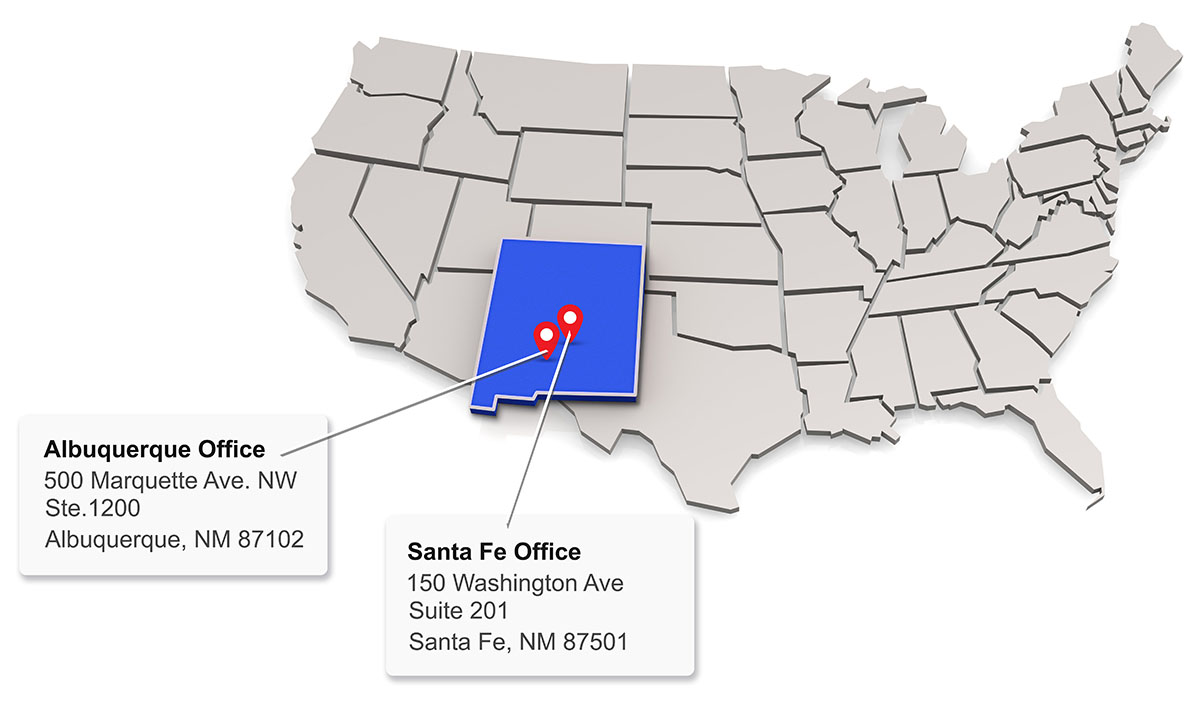
We also have our Office at Santa Fe located at 150 Washington Ave, Suite 201. If you’re unable to visit us, our attorneys are happy to meet you at your home or hospital to discuss your case.